


We transform traditional thermal power plants into intelligent hybrid matrices, leading the energy transition in Isolated Systems (SISO) with cutting-edge technology and real sustainability.
VPFLEXGEN Brazil designs, installs, and operates hybrid photovoltaic systems in isolated Amazon communities. Each plant balances high-complexity electrical engineering, fluvial logistics, and absolute respect for local biodiversity.
We operate where the conventional grid doesn’t reach — replacing diesel generators with clean solar energy without compromising supply stability.
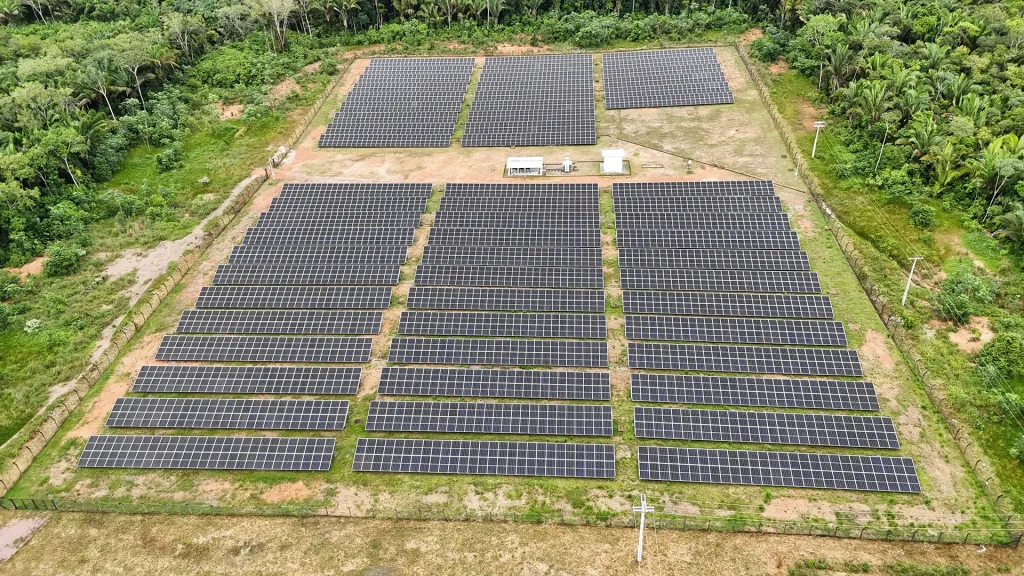
The greatest challenge in the Amazon is not just generating energy, but integrating it with stability. Our TPP (Thermal Power Plant) Hybridization solution uses advanced control algorithms to prioritize solar during irradiation periods. By injecting clean energy directly into the bus, we reduce the load on generator sets, optimizing fuel consumption and extending equipment lifespan.
Our integration directly replaces diesel, generating an immediate reduction in the CCC (Fuel Consumption Account). Through dynamic management, we ensure every kW generated by the sun means fewer liters of diesel burned. This results in a significant O&M (Operation and Maintenance) reduction, as generators operate in more efficient regimes for fewer hours.
Injecting intermittent energy into isolated systems requires expertise. We use grid inverters with grid-following and grid-forming technology that communicate in real time with existing thermal controllers. Our architecture is born ready for BESS (Battery Energy Storage Systems) coupling.
Operating in locations such as Borba and São Gabriel da Cachoeira requires overcoming immense geographic barriers. By reducing diesel dependence, we ease the complex fluvial fuel transport logistics across the Amazon rivers, mitigating environmental accident risks.
Technology, sustainability, and reliable operation combined into a single energy platform.
Seamless integration with legacy diesel systems without supply interruption.
Direct fuel consumption reduction and immediate positive impact on the CCC.
Replacement of fossil sources with clean energy in highly sensitive environmental areas.
Less wear on generator sets and reduced maintenance costs.
Infrastructure compatible with large-scale battery storage systems.
Reduced fuel barge traffic, lowering operational costs and environmental risks.